Description
Overview
Essential EDX Series: Volume II Insertional and Spontaneous Activity provides a comprehensive review of key electromyography (EMG) concepts focusing on insertional and spontaneous muscle activity. This series covers the technical aspects, waveform characteristics, and clinical interpretation essential for neurology professionals and electromyographers. On-demand neurology education — accessible anytime, anywhere.
Content
This course presents detailed lectures and demonstrations addressing various spontaneous EMG activities and potential waveforms. The content enhances practical understanding of electromyographic signals and their clinical relevance.
- Introduction
- Technical Aspects
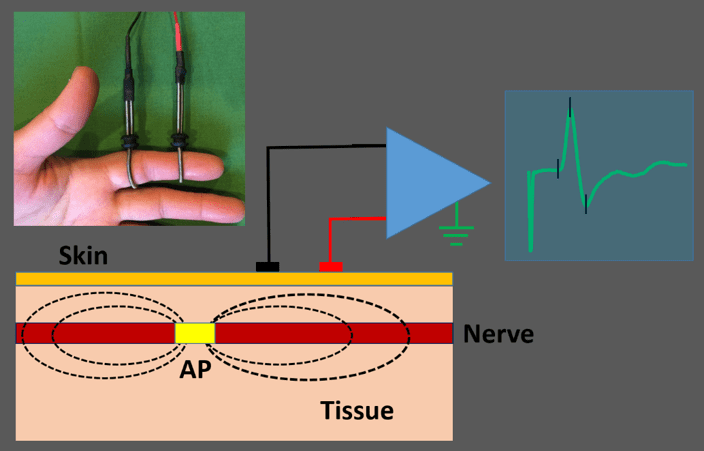
- Action Potential
- Instrumentation
- Settings and Display
- Insertional Activity
- Lecture
- Normal
- Increased
- Reduced
- Dual Time Base – Filters
- Pitfalls
- Miniature End-plate Potentials
- Lecture
- Waveform and Rhythm
- With End-plate Spikes
- End-plate Spikes
- Lecture
- Waveform and Rhythm
- Interference and Miniature End-plate Potentials
- Triphasic vs Motor Unit Potential
- Fibrillation Potentials and Positive Sharp Waves
- Lecture
- Waveform and Rhythm (Fibrillation)
- “Rain on Tin Roof” Phenomenon
- Fibrillation Potentials Equal Positive Sharp Waves
- Low Amplitude
- Waveform and Rhythm (Positive Sharp Waves)
- Trains of Positive Sharp Waves
- Not Sustained
- Voluntary Activation vs Motor Unit Potential
- Complex Waveform
- Complex Repetitive Discharge
- Lecture
- Waveform and Rhythm
- Abrupt Change
- Slow Rate
- Simple
- Ephaptic Transmission
- Myotonic Discharge
- Lecture
- Waveform and Rhythm
- Percussion
- “Distant Thunder” Sound
- Slow
- Fasciculation Potential
- Lecture
- Waveform and Rhythm (Fibrillation)
- Neurogenic Motor Unit Potential vs Motor Unit Potential
- Very Slow
- Pitfalls
- Myokymic Discharge
- Lecture
- Waveform and Rhythm
- Multiple Motor Unit Potentials
- Two Discharges
- Facial Muscle
- Neuromyotonic Discharge
- Lecture
- Waveform and Rhythm
- Induced by Motor Unit Potential
- Cramp Discharge
- Lecture
- Waveform and Rhythm
- Sudden Onset
Speakers
This course features expert instruction by Paul E. Barkhaus, M.D., and Sanjeev D. Nandedkar, Ph.D., authorities in the field of electromyography and neurology. Their expertise supports the educational content and clinical applications presented.
Target Audience
This course is designed for neurologists, electromyographers, neuromuscular specialists, and allied health professionals who seek to deepen their understanding of insertional and spontaneous EMG activity for clinical and diagnostic purposes.
Why This Topic Matters
Essential EDX Series: Volume II Insertional and Spontaneous Activity addresses integral aspects of neurology related to electromyographic interpretation essential for accurate diagnosis and management of neuromuscular disorders. Mastery of insertional and spontaneous activity strengthens professional expertise in EMG analysis.
The detailed clinical focus found in this course reinforces practical skills and knowledge through MedHub Central’s on-demand platform, enhancing ongoing professional development in neurology and electromyography.