Description
Overview
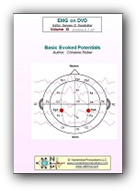
Volume XI of the EMG/NCS Online Series focuses comprehensively on Evoked Potentials, providing a detailed exploration of anatomy, electrode application, and advanced techniques for recording and interpreting electrophysiological signals. This volume serves as a vital resource for clinicians and researchers who require a thorough understanding of somatosensory, brainstem auditory, and other evoked potentials in clinical neurophysiology.
The book covers foundational topics including the 10–20 electrode system, electrode placements at key anatomical landmarks such as the mastoid, cervical spine, lumbar spine, and popliteal fossa, and procedural protocols for upper and lower limb somatosensory evoked potentials. It also delves into technical details essential for obtaining accurate, reliable readings, such as signal averaging, artifact rejection, and stimulation parameters.
Key Topics Covered
- Anatomy and Electrode Application using the 10–20 system
- Stimulator placement and settings for precise recording
- Somatosensory Evoked Potentials (SEP) procedures for upper and lower limbs
- Brainstem Auditory Evoked Potentials (BAEP) methodology and technical considerations
- Techniques for signal processing including smoothing, signal averaging, and alternate averaging
- Artifact rejection methods and strategies to minimize interference
- Montage configurations for various evoked potential studies
- Marking procedures essential for consistent data interpretation
- Stimulation site protocols and stimulus intensity calibration
- Recording techniques optimized for clinical accuracy
Who This Book Is For
This volume is designed for neurologists, neurophysiologists, technologists, and medical professionals involved in electrophysiological diagnostics. It is particularly useful for those seeking a step-by-step guide to evoked potential testing within clinical or research settings.
With its detailed protocol descriptions and technical guidance, this book benefits practitioners who perform or interpret somatosensory and brainstem auditory evoked potentials. It also supports trainees in neurology and clinical neurophysiology who require a solid grounding in standardized measurement and interpretation techniques.
- Neurologists and Clinical Neurophysiologists
- EMG and NCS Technologists
- Medical Residents and Fellows specializing in neurology or clinical neurophysiology
- Researchers focusing on electrophysiology and neurodiagnostic methods
- Academic instructors responsible for training healthcare professionals
- Healthcare practitioners seeking procedural and technical accuracy
- Medical libraries and institutions requiring comprehensive diagnostic references
Why Add This Book To Your Library
This volume addresses the critical need for high-quality educational materials in evoked potential testing by combining practical application with in-depth technical knowledge. Its stepwise procedural format promotes reproducibility and accuracy in clinical practice.
By incorporating detailed anatomical guides, electrode application techniques, and troubleshooting strategies for signal acquisition, this book ensures users can confidently perform and interpret evoked potential studies. It enriches institutional collections with essential information for improving diagnostic workflows and enhancing patient care.
Author
The authoritative content of this volume is authored by Christine R. Reber, an expert in the field of clinical neurophysiology. Her insights and detailed explanations offer clarity and expertise to support both novice and experienced users in mastering evoked potentials.
- Christine R. Reber
Access & Format
This edition of the EMG/NCS Online Series: Volume XI is presented as a multimedia DVD resource, facilitating interactive learning and accessibility. It is part of a specialized series edited by Sanjeev Nandedkar, Ph.D., and Anjali Nandedkar, Ph.D., ensuring high editorial standards.
The DVD format allows users to engage with visual and procedural content in a flexible learning environment, ideal for clinical settings and academic use. This format complements traditional textbooks by providing dynamic instructional support for evoked potential testing techniques.