Description
Overview
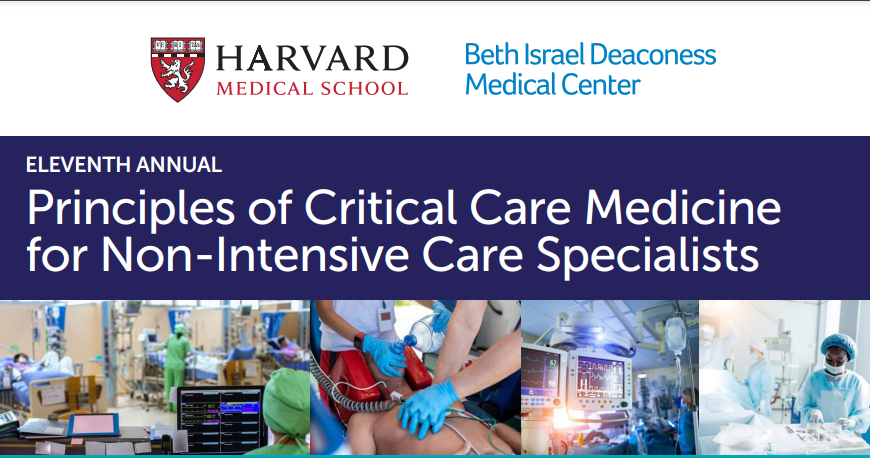
Harvard 11th ANNUAL Principles of Critical Care Medicine for Non-Intensive Care Specialists 2023 is a comprehensive on-demand educational course originally delivered in September 2023. This program covers essential principles and advanced concepts in critical care medicine tailored specifically for non-intensive care specialists. On-demand Pulmonology education — accessible anytime, anywhere.
This course addresses a wide range of topics including mechanical ventilation, shock management, post-intensive care syndrome, and critical care procedures with a focus on evidence-based clinical application to strengthen professional expertise in the critical care environment.
Agenda
This course content includes detailed coverage of critical care issues relevant to non-intensive care specialists. Key topics addressed are:
- Mechanical ventilation and patient-ventilator interactions
- Non-invasive ventilation and high-flow nasal cannula
- Arrhythmias
- Nutrition in the ICU
- Point-of-care ultrasound utilization in the ICU
- Advancements in post-resuscitation care
- End-of-life care in the ICU
- Shock and vasopressors
- Sedation and delirium
- Sleep in the ICU
- Pulmonary embolism
- Palliative care in the ICU
- Post-intensive care syndrome
- Refractory hypoxemia and ARDS
- ECMO
- Neurocritical care
- Ventilator troubleshooting
- Infectious emergencies and updates in antimicrobial selection
- Toxidromes
- Oncologic emergencies
- Humanizing the ICU
- Time-limited trials in the ICU
- Severe acid-base and electrolyte disturbances
Learning Objectives
- Review the basic principles of mechanical ventilation and describe indications for noninvasive and invasive ventilation
- Describe evidence-based approaches to diagnosis and management of common infections in the ICU
- Categorize different types of shock, describe the pathophysiologic mechanisms behind each, and formulate appropriate treatment strategies
- Identify the evidence-based management of hypoxic failure, including the use of high-flow nasal cannula, lung-protective ventilation, PEEP optimization, proning, and ECMO
- Describe the importance of point-of-care ultrasound (POCUS) in the diagnosis of shock and volume status
- Recognize post-intensive care syndrome and describe best practices for management
- Identify contemporary approaches to sedation in the ICU
- Recognize and manage common toxicology emergencies
- Assess cardiac emergencies such as heart failure and unstable arrhythmias
- Describe treatment options for massive and submassive pulmonary emboli
- Diagnose and treat commonly encountered electrolyte abnormalities
- Describe best practices for end-of-life care in the ICU
Speakers
This course features presentations from leading experts in critical care medicine, pulmonology, and related specialties. The faculty includes experienced clinicians and educators who provide evidence-based insights into the management of complex critical care scenarios. The program is sponsored by Harvard and aligns with current standards of critical care practice.
Target Audience
This course is designed for non-intensive care specialists including hospitalists, pulmonologists, emergency medicine physicians, internal medicine practitioners, and other healthcare professionals seeking to enhance their understanding and management of critically ill patients.
Why This Topic Matters
Harvard 11th ANNUAL Principles of Critical Care Medicine for Non-Intensive Care Specialists 2023 addresses vital knowledge areas in critical care medicine relevant to pulmonology and internal medicine clinicians. The complexity of ICU patient care requires strong foundational principles and updates on advanced modalities, all of which are covered comprehensively in this program.
MedHub Central provides accessible, expert-led education that supports ongoing professional development in Pulmonology and critical care. This course reinforces essential skills and contemporary practices that are crucial for non-intensive care specialists involved in the care of critically ill patients.