Description
Overview
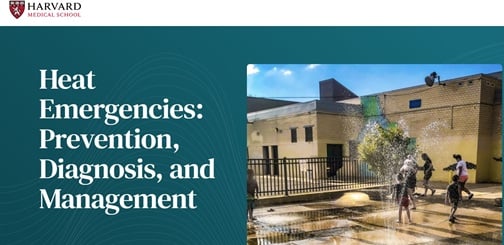
Harvard Heat Emergencies: Prevention, Diagnosis and Management 2025 (Videos with subtitles + Slides) is an on-demand digital course designed to equip clinicians with comprehensive knowledge on diagnosing, treating, and preventing heat-related illnesses. This evidence-based program covers thermal physiology, evolving epidemiology, clinical management strategies, and preventive approaches relevant across patient populations.
On-demand emergency medicine education — accessible anytime, anywhere.
Format: Videos with subtitles and slides
Agenda
This virtual course delivers structured content across four thematic days focusing on clinical education and management of heat emergencies.
- Day 1: Welcome, Overview, and Importance of Heat Clinical Education
- Defining Heat — Caleb Dresser
- Heat Physiology — Robert Meade
- Epidemiological Impacts of Heat — Antonella Zanobetti
- Case Studies of Heat-Related Illness — Gayle Kouklis, Mary Meyer, Tara Benesch
- Closing Remarks and Q&A — Caleb Dresser, Tess Wiskel
- Day 2: Clinical Management of Heat-Related Illness
- Welcome and Recap — Caleb Dresser, Tess Wiskel
- Event Medicine and Heat-Related Illness — John Jardine, MD
- Current Evidence on Heat-Related Illness — Kurt Eifling
- Diagnosis of Heat-Related Illness — Tess Wiskel
- Management of Heat-Related Illness — Caleb Dresser
- Closing Remarks and Q&A — Tess Wiskel, Caleb Dresser
- Day 3: Heat Impacts on Special Populations
- Welcome and Recap — Caleb Dresser, Tess Wiskel
- Heat, Kidney Disease, and Outdoor Work — Nathan Raines
- Pharmaceutical Considerations in Hot Weather — Hayley Blackburn
- Small Group Discussions: Special Populations in Practice — Caleb Dresser, Tess Wiskel
- Heat-Related Illness in Special Populations — Bruce Bekkar, Marissa Hauptman, Manijeh Berenji, Nisha Shah
- Heat and Behavioral Health — Elizabeth Pinsky
- Closing Remarks and Q&A — Caleb Dresser, Tess Wiskel
- Day 4: Prevention, Systems, and Policy Solutions
- Welcome and Recap — Caleb Dresser, Tess Wiskel
- Prevention and Management in Low-Resource Settings — Satchit Balsari
- Practical Resources for the Busy Clinician — Geoffrey Comp, Caleb Dresser, Tess Wiskel
- Health System Impacts & Preparedness for Extreme Heat — Jeremy Hess
- Preventive Solutions Through Public Health and Policy — Jane Gilbert
- Closing Remarks and Q&A — Caleb Dresser, Tess Wiskel
Learning Objectives
- Explain the epidemiology of heat-related illness and associated disease processes.
- Recognize the thermal physiology underlying clinical presentations of heat-related illness.
- Create a differential diagnosis and develop comprehensive, evidence-based management plans for all forms of heat-related illness, including heat exhaustion, heat syncope, and heat stroke.
- Describe groups at increased risk for heat-related illness and develop anticipatory guidance and prevention plans.
- Discuss pharmacological interactions with heat-related illness and develop plans for protecting patients.
- Identify resources and best steps needed for preparedness, diagnosis, and treatment of heat-related illness during event medicine and in low-resource settings.
- Explain the impacts of heat across organ systems, including mental health, behavioral health, and kidney disease.
- Apply preventive solutions for heat-related illness from community-based, public health, and health systems perspectives.
Speakers
- Caleb Dresser
- Tess Wiskel
- Robert Meade
- Antonella Zanobetti
- Gayle Kouklis
- Mary Meyer
- Tara Benesch
- John Jardine, MD
- Kurt Eifling
- Nathan Raines
- Hayley Blackburn
- Bruce Bekkar
- Marissa Hauptman
- Manijeh Berenji
- Nisha Shah
- Elizabeth Pinsky
- Satchit Balsari
- Geoffrey Comp
- Jeremy Hess
- Jane Gilbert
This program is originally delivered as a multi-day live course and is now available on-demand, providing flexible access for clinicians seeking to strengthen their expertise in heat emergency management.
Target Audience
This course is suitable for emergency medicine clinicians, internists, nephrologists, and other healthcare professionals involved in the diagnosis, treatment, and prevention of heat-related illnesses.
Why This Topic Matters
The Harvard Heat Emergencies: Prevention, Diagnosis and Management 2025 (Videos with subtitles + Slides) course addresses the growing clinical challenges posed by heat-related illnesses. It provides in-depth knowledge on pathophysiology, epidemiology, and evidence-based management critical to emergency medicine and internal medicine practice.
Available through MedHub Central, this course supports clinicians to enhance their confidence in recognizing and managing heat emergencies, offering a valuable resource for improving patient care and public health outcomes in a warming climate.